
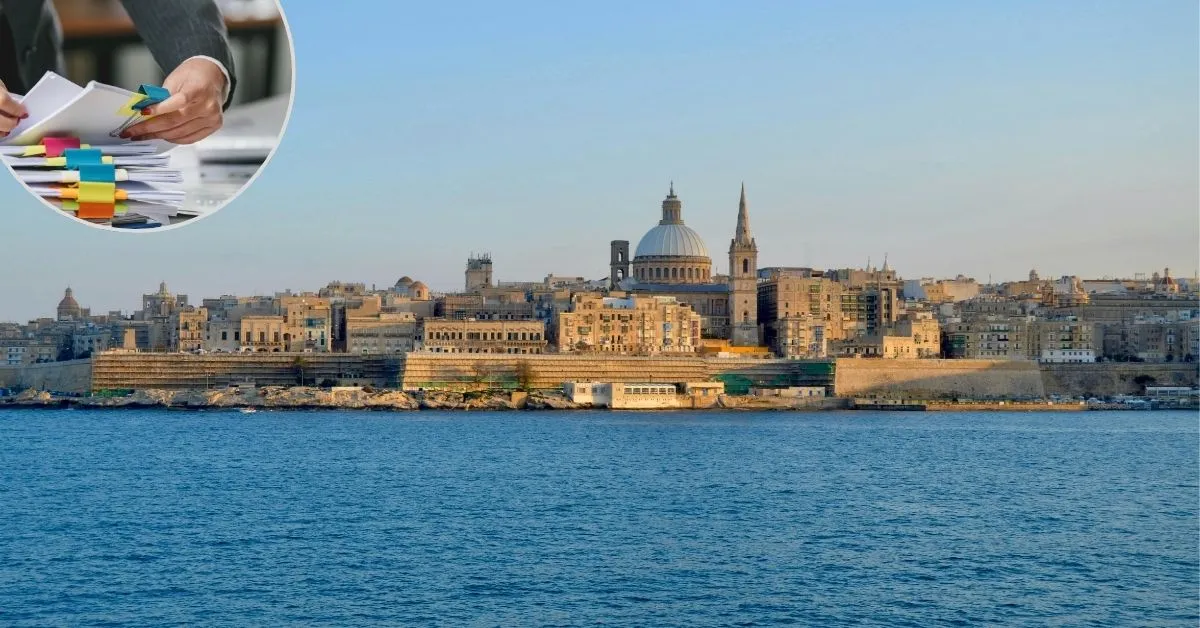
The Malta Global Residence Programme (GRP) is one of the most established tools in the EU for internationally mobile high-net-worth individuals who want a legitimate European tax base without the obligation to relocate full-time. Its signature feature is a flat 15% tax rate on foreign income remitted to Malta — a defined, predictable rate that replaces progressive rates reaching 35%. This guide explains how the GRP works in 2026, who qualifies, what it costs, and — just as importantly — when it does not make financial sense.
What the Global Residence Programme actually is
The GRP is a special tax status, not a citizenship route and not automatic tax residence. It was introduced in 2013 under the Global Residence Programme Rules (S.L. 123.148) and remains Malta’s longest-standing special-status framework for non-EU, non-EEA and non-Swiss nationals. EU, EEA and Swiss nationals are not eligible for the GRP; their equivalent is The Residence Programme (TRP), which mirrors the same 15% mechanics.
A crucial distinction that catches many applicants out: holding GRP special tax status does not, by itself, make you Maltese tax resident. The status defines how you are taxed once resident (the remittance basis at a flat 15%); it does not determine whether you are resident. That question depends on physical presence, permanent home, and centre of vital interests — which is exactly why pre-immigration planning matters.
How the flat 15% tax works
The GRP applies Malta’s remittance basis of taxation. In plain terms, only money you actually bring into Malta is taxed here. The mechanics break down into four categories:
| Income / gain | Malta tax treatment |
|---|---|
| Foreign income remitted to Malta | Flat 15% — no upper cap on the amount that benefits from this rate |
| Foreign income kept abroad (not remitted) | Not taxed in Malta |
| Foreign capital gains | Never taxed in Malta — even if remitted |
| Income arising in Malta (local salary, Malta rental) | Taxed at standard progressive rates up to 35% |
The absence of a cap on the 15% rate is what makes the GRP compelling at the top end. An individual remitting €3 million of foreign income to Malta pays €450,000 and nothing further — regardless of how much additional foreign income stays offshore. The foreign capital gains exemption is arguably even more valuable: for a founder selling shares held through an offshore vehicle, that single rule can be worth millions, and it applies whether or not the proceeds are brought into Malta.
The €15,000 minimum annual tax
GRP beneficiaries pay a minimum annual tax of €15,000, covering the main applicant and all qualifying dependants together. This is a floor, not an addition: if your 15% on remitted income already exceeds €15,000, you simply pay the 15%. If it comes to less, you top up to €15,000. Double taxation treaty relief is available, but generally only down to the level of the minimum tax — the €15,000 floor cannot be eroded below zero by treaty credits.
This fixed floor is the pivot point of the entire cost-benefit analysis. It rewards high, predictable remittances and penalises low or irregular ones — a point we return to in the honest-limitations section below.
Eligibility and requirements in 2026
- Nationality: non-EU, non-EEA, non-Swiss.
- Age: 18 or over, with a clean criminal record.
- Financial self-sufficiency: stable and regular resources sufficient to maintain yourself and your dependants without recourse to Malta’s social assistance.
- Health insurance: EU-wide sickness cover for yourself and all dependants.
- Qualifying property: purchase or rent a qualifying residential property (thresholds below) held for the duration of the status and not sublet or shared with anyone other than listed dependants.
- Residence rule: you must not spend more than 183 days in any single other country in a calendar year. There is no minimum stay in Malta.
- Authorised Registered Mandatary (ARM): the application must be filed through a licensed ARM — you cannot apply directly.
Property thresholds and fees
| Requirement | North / Central Malta | South Malta / Gozo |
|---|---|---|
| Property purchase (minimum) | €275,000 | €220,000 |
| Property rental (minimum p.a.) | €9,600 | €8,750 |
| One-time administrative fee | €6,000 | €5,500 |
The administrative fee is non-refundable and paid on submission. Rental agreements must run for a minimum of 12 months. The qualifying property must remain in your control throughout: sell or surrender it without securing a replacement qualifying property and the special status can be revoked.
Who you can include
One application can cover the main applicant plus a broad household: spouse or partner, children (minors automatically; adult children under 25 who are financially dependent), and dependent ascendants such as parents and grandparents on both sides. Bona fide household staff can also be included, though their income is taxed at standard rates. The €15,000 minimum tax covers the whole family — there is no per-head multiplier under the GRP itself.
The application process
- Engage an ARM and complete a preliminary eligibility and tax-position review.
- Secure qualifying property (purchase or 12-month-plus lease) and health insurance.
- Prepare the file: due diligence documents, proof of funds, source-of-wealth evidence, translated and apostilled where required.
- Submit through the ARM with the administrative fee.
- Due diligence and approval by the Malta Tax and Customs Administration.
- Confirmation of special tax status — the 15% rate and €15,000 minimum apply from the year of confirmation onward.
Status is renewable annually for as long as the conditions continue to be met, and each renewal typically requires a declaration that the 183-day rule has been respected. Ongoing compliance is a condition of holding the status, not an optional extra.
When the GRP does NOT make sense
Honest advice means being clear about the cases where the GRP is the wrong tool:
- Low or irregular remittances. If you only need to bring modest sums into Malta, the €15,000 fixed floor can be far heavier than ordinary non-dom treatment, where the minimum is €5,000 (and only €5,000 applies once foreign income exceeds €35,000). The GRP generally starts to pay off when annual remittances comfortably exceed roughly €100,000.
- Your home country still treats you as tax resident. If another jurisdiction continues to claim worldwide taxation over you, Malta’s 15% may deliver little net benefit — and could create double-reporting headaches.
- Most of your income arises in Malta. Malta-source income is taxed at up to 35% regardless of GRP status. The programme rewards foreign income, not local earnings.
- You need EU-wide free movement. The GRP gives Schengen short-stay travel (90 days in any 180), not the right to live and work across other EU states.
Because Maltese tax residence is not automatic under the GRP, and because the interaction with your home-country rules and treaty network determines the real outcome, this is a decision that should be modelled on your specific numbers before you commit. That is precisely the analysis our team runs for every GRP enquiry.
GRP vs MPRP: a quick orientation
The GRP is frequently confused with the Malta Permanent Residence Programme (MPRP). They serve different purposes. The MPRP grants permanent residence — a stronger legal status — but carries no defined tax rate; your tax position depends on domicile and broader structuring. The GRP grants a renewable permit but locks in the defined 15% rate. For some applicants the two are combined: securing permanent residence first, then layering the GRP on top to fix the tax treatment. Which route fits depends entirely on your income profile and objectives.
Frequently asked questions
Do I have to live in Malta to keep GRP status?
No. The GRP imposes no minimum stay in Malta. The only presence rule is that you must not spend more than 183 days in any single other country in a calendar year, which would risk shifting your tax residence there.
Is there a cap on the 15% flat rate?
No. There is no upper limit on the amount of remitted foreign income that benefits from the 15% rate. Someone remitting €3 million pays €450,000 and nothing further on that income.
Are foreign capital gains taxed under the GRP?
No. Foreign-source capital gains are never chargeable to Maltese tax, whether or not they are remitted to Malta — provided you remain non-domiciled. This is one of the programme’s most valuable features for founders and investors.
Can EU citizens apply for the GRP?
No. The GRP is for non-EU, non-EEA and non-Swiss nationals only. EU, EEA and Swiss nationals use The Residence Programme (TRP), which applies the same 15% flat rate and €15,000 minimum tax.
What is the total minimum cost to hold the status each year?
The recurring floor is the €15,000 minimum annual tax, plus your qualifying property cost (rent from €8,750 or ownership). The €6,000 (or €5,500) administrative fee is a one-time charge on application.
Can I include my family?
Yes. One application covers your spouse or partner, dependent children (under 25 if adult), and dependent parents and grandparents. The €15,000 minimum tax covers the whole household — there is no per-person multiplier under the GRP.
Model your GRP position before you commit
Whether the GRP saves you money or simply adds a €15,000 fixed cost depends entirely on your remittance profile, your home-country residence rules, and your treaty position. Our Malta tax advisory team models the exact figures for your situation, and our residence and relocation service manages the application end to end as your Authorised Registered Mandatary.
Book a confidential consultation to find out whether the GRP is the right structure for you.